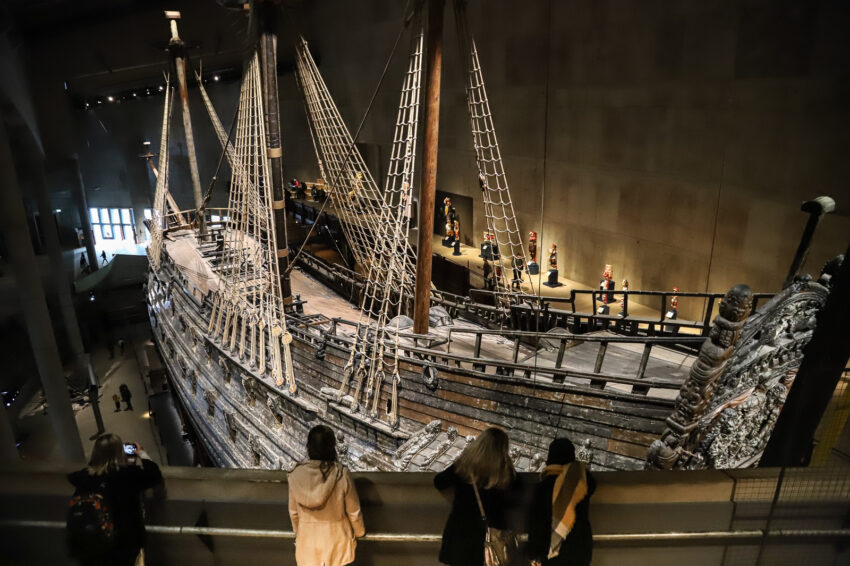
Vasa Museum (Vasamuseet) is located on Djurgården Island, this museum is home to the world’s only preserved 17th-century ship – the mighty Vasa. Unlike any other museum, it offers history, drama, and breathtaking craftsmanship all in one place.
📍 Getting to the Vasa Museum
Stockholm is built on 14 islands connected by 57 bridges, which makes every journey scenic. The Vasa Museum is located on Djurgården Island, one of the city’s cultural hotspots.
- From T-Centralen (the central metro hub), take Tram 7.
- Get off at the Vasamuseet stop (about 4 stops away).
- From the tram stop, it’s a 5–7 minute walk (around 450 meters) to the museum.
- Along the way, you’ll cross a small bridge with gorgeous views of Stockholm’s skyline—worth stopping for photos.
👉 You can also reach Djurgården by ferry from Gamla Stan or Slussen for a different perspective of the city.
🎟 Tickets & Opening Hours
- Entry: Around 190 SEK (single ticket) / Combination tickets with nearby museums also available.
- Children up to 18 years: Free.
- Opening hours: Usually 10:00 am – 5:00 pm (longer in summer).
- Hindi guide booklets and audio guides are available—something unique you don’t see in many European museums!
🚢 The Story of the Vasa Ship
The Vasa ship was built in the early 17th century under the rule of King Gustavus Adolphus. It was intended to be one of the most powerful warships of its time, carrying 64 cannons and richly decorated carvings.
But in 1628, on its very first voyage, the ship tragically sank in Stockholm harbor—barely 1,300 meters from where it set sail.
More than 300 years later, in 1961, the Vasa was salvaged and remarkably found to be 98% preserved. Today, it stands proudly in the museum as the best-preserved 17th-century ship in the world.
🖼 What to See Inside the Vasa Museum
The museum is built around the ship itself, with seven viewing levels, allowing visitors to admire it from different angles.
Highlights include:
- The Ship Itself – 69 meters long and stunningly detailed, with more than 700 wooden carvings depicting Roman emperors, mythological figures, mermaids, and Norse gods.
- Recovered Artifacts – Everyday objects from the ship, such as cooking utensils, sailors’ personal belongings, and tools, offering a glimpse into 17th-century life at sea.
- Exhibitions & Films – Short films and exhibits explain the construction, sinking, and recovery of the ship.
- Audio Guides & Booklets – Available in multiple languages, including Hindi, making the experience accessible to Indian travelers.
👉 Don’t miss the 7th floor viewpoint—it gives you a complete overhead view of the Vasa ship, which is simply breathtaking.
🌟 Why Visit the Vasa Museum?
- It’s one-of-a-kind: no other ship from this era has survived in such condition.
- It combines history, art, and storytelling in a way that feels anything but boring.
- The detailing on the carvings is extraordinary—you could spend hours admiring the ship alone.
- It’s a perfect indoor activity if you’re visiting Stockholm in winter or on a rainy day.
🏝 Explore More on Djurgården Island
Djurgården isn’t just home to the Vasa Museum—this island is a museum hub. In the same area, you’ll find:
- The Viking Museum (right next to Vasa)
- ABBA The Museum (for music lovers)
- Skansen (the world’s oldest open-air museum)
- Nordiska Museet (Swedish history and culture)
If you only have a short time in Stockholm, make Vasa your priority, then pick one or two others based on your interests.
✨ Final Thoughts
The Vasa Museum is more than just a museum—it’s a time capsule that brings 17th-century Sweden back to life. Whether you’re a history buff, a culture enthusiast, or simply curious, standing in front of this colossal ship is an unforgettable experience.
It may be a little on the expensive side, but it’s worth every krona for the uniqueness, scale, and storytelling it offers. If you’re in Stockholm, the Vasa Museum deserves a top spot on your itinerary.
Follow me on Instagram, Facebook, and Youtube. Don’t forget to check out our latest adventure across Norway and Finland. Also check out our recent blog posts on other parts of Europe.